

We Could Be Using Stablecoins a Whole Lot More in 2030

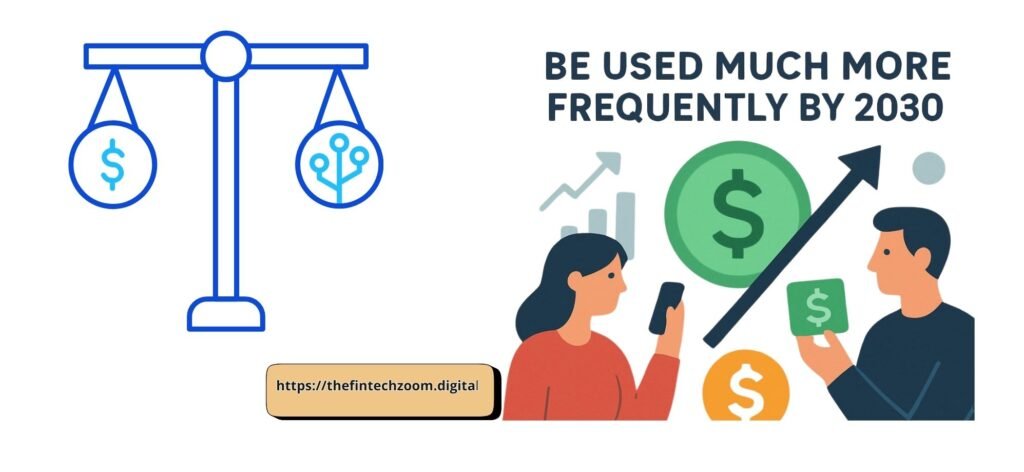
Digital currency is no longer the domain of day traders on reddit. Just as Bitcoin is grabbing headlines with its volatility, a quieter revolution is brewing in the background: stablecoins. These digital assets, engineered to safeguard against the price swings that plague Bitcoin and other cryptocurrencies, are expected to be a part of the world’s financial architecture. By 2030, stablecoins may graduate from niche crypto tools to the dominant payments technology for hundreds of millions — potentially billions!
The magic of stablecoins is in their premise. They provide the speed and security of blockchain-based currencies without your having to stomach horrifying price swings in traditional crypto. With inflation nibbling at economies around the world and people searching for faster, cheaper ways to transfer money, stablecoins are gaining serious traction. This is much more than a technology shift; it’s about redefining what money means, how banking works and the nature of global trade.
What Are Stablecoins? A Clear and Simple Explanation
Fundamentally, stablecoins are cryptocurrencies that are intended to maintain a constant value. While a bitcoin might be $60,000 or $50,000 one day and the next, depending on whether Tesla has bought or sold some of it you can think that but here we are as always with a stablecoin: it is meant to remain a pegged asset otherwise it doesn’t do its job most commonly to the US dollar. If you have 100 of those USDC or USDT, it should always represent exactly $100.
This stability is what sets them apart. Those traditional cryptocurrencies are used more like digital gold or speculative stocks — things you invest in with the hope their value will increase. Stablecoins function like digital cash. They are a means of exchange, not a store of value for speculation. For adoption to take place, they must know their rent money won’t lose 10% of its value overnight. Stablecoins solve that problem.
Types of Stablecoins Explained
Not all stablecoins are built the same. However, they are pegged in different ways:
Fiat-Collateralized Stablecoins
These are the simplest and most well known but they also work best. The issuer holds the equivalent of 1$ of fiat currency (like a U.S dollar or a Euro) in bank reserve for each digital coin issued. Examples include Tether (USDT) and USD Coin (USDC).
Crypto-Collateralized Stablecoins
These are supported by other cryptocurrencies. These stablecoins are generally “over-collateralized” because the collateral (like Ethereum) is fluctuating. In other words, to be able to mint $100 of stablecoin, you might in fact need $150 worth of Ethereum locked away to account for fluctuations in price. Dai (DAI) is a prime example.
Algorithmic Stablecoins
These are the most experimental. They don’t use collateral. They use smart contracts and algorithms instead to manage the supply. If the price gets too high, the system starts minting more coins to tamp it down. If it falls, it incinerates coins to boost the price. These come with higher risks, as best observed in the implosion of TerraUSD.
Commodity-Backed Stablecoins
Those are based on the value of physical assets, such as gold or oil. Pax Gold (PAXG) is backed by real gold bars sitting in vaults.
Why Stablecoins Could Multiply 50X by 2030
There are several macroeconomic and technology trends that will come together to fuel stablecoin adoption over the next ten years.
Faster, Cheaper Payment Needs
Traditional banking is slow. Transferring money abroad can mean fees of several percentage points and a wait of days. Because stablecoins are built on blockchains, they can be moved nearly instantaneously and at a fraction of the cost 24 hours a day.
Growing Digital-First Economies
With the gig economy on the rise and digital natives coming of age in the workforce, there is greater demand for instant, cross-border payment. Stablecoins fit neatly into this environment.
Rising Inflation and Currency Instability
People in nations with hyperinflation are already using stablecoins to preserve their purchasing power. When a local currency is devaluing by the day, having a digital dollar becomes a financial lifeline.
Stablecoins vs Traditional Banking Systems
Traditional banking, which people often refer to as “TradFi,” works on infrastructure that was laid down decades ago. Stablecoins represent an upgrade.
• Speed: A bank payment may not clear until Monday morning. A stablecoin transfer settles in minutes (or even seconds) no matter what time or day it is.
• Everything costs: Banks have overheads—branches, staff, legacy servers. Blockchains are automated. This is how our efficiency and the low fees for users arise.
• Accessibility: To open many bank accounts, you need a government I.D., proof of address and credit history. There’s a simple way to play it safe: Open a digital wallet, which you can do with nothing more than a smartphone and internet access.
• Cross-Border Advantage: Transferring money from New York City to London through a bank requires intermediaries, exchange rates and fees. With stablecoins, it is as simple as sending an email.
The Functionality of Stablecoins in International Remittances
Remittances — money that migrant workers send to their families living in lower-income countries — is a trillion-dollar industry. Unfortunately, it’s also a sector cursed by high fees. Intermediaries such as Western Union or MoneyGram extract their own cut, exchange rates are a drain on the total.
Stablecoins disrupt this model entirely. An employee in the U.S. can exchange dollars into stablecoins and send them to a relative in the Philippines, instantaneously. The recipient can then trade those stablecoins for their local currency or spend it as is. This restores more money to the pockets of the families who need it most.
Stablecoins and E-Commerce Growth
Online retailers fight a neverending war against credit card charges (usually around 2-3%) and chargeback scam. Stablecoins offer a solution. Transactions are not reversible and the risk of chargeback is absent. There are no card networks, so transaction fees are minimal.
Such a world may not be so far off: In just over 10 years, we might see stablecoin payments accepted in many of the same locations as Visa and PayPal. That integration could enable instant settlement, so businesses can get their revenue back into their bank account the moment it’s processed rather than waiting days for card processors to payout.
Institutional Adoption: Are Big Companies Prepared for It?
The suits are coming to the crypto party. Big financial companies are no longer ignoring stablecoins; they are experimenting with them.
• Banks: JPMorgan has already created its own digital coin for internal transactions. Other banks are exploring how best to custody stablecoins for clients.
• Corporate Treasuries: Seeing that companies are now holding stablecoins as assets to make faster O.K.E. payments abroad.
• Fintech: Payment processors such as Stripe and PayPal have already started taking in stablecoin’s functionality, thus hinting at a giant interconnect between Web2 and Web3 finance.
Government Regulations and Legal Frameworks
Regulation is the most serious obstacle — and opportunity — for stablecoins. Right now, it’s a patchwork of confusion. However, clarity is coming. We anticipate full legal frameworks (US, EU, UK) by 2030.
While regulation is perceived to limiting, it’s essential for widespread use. Big businesses and conservative investors will have nothing to do with stablecoins until the government gives a green light. Transparent guidelines on reserves, audits and consumer protection will give legitimacy to the industry.
Stable Coins and CBDCs
Governments are creating their own digital currencies (CBDCs) like the Digital Euro or the Digital Yuan. Are these stablecoin killers? Not necessarily.
CBDCs are states’ obligations and liabilities, while stablecoins originate in the private sector. Chances are they will. CBDCs could be used for inter-bank settlements and tax collection, while stablecoins are popular in the private sector, as well as DeFi (Decentralised Finance) and cross-border trade. The push and pull of competition between the two may help speed product innovation, benefitting consumers.
Risks and Challenges Facing Stablecoins
The path from here to 2030 is not free of potholes.
• Reserve Transparency: Users should be able to verify that, for every digital dollar, there is a corresponding physical dollar in a vault. Some issuers, historically, have been less than transparent about their reserves.
• Technological Risks: Smart contracts can be vulnerable to attack. Blockchains can face congestion.
• Liquidity Risks: Should everyone at once try to redeem their stablecoins, can the issuer support the run?
Addressing these trust issues is important if prediction regarding mass use is to pan out.
Stablecoins in Decentralized Finance (DeFi)
DeFi — short for “decentralized finance” — is essentially a parallel financial system that uses the blockchain digital ledgers to create and run elaborate markets outside traditional banking institutions. You can lend, borrow and trade assets with others. These are the lifeblood of this system: Stablecoins.
They’re the collateral of choice for loans and the coin-of-the-realm for trading. As DeFi becomes easier to use, the stablecoin need will increase in proportion. They are what make complex financial contracts viable.
Stablecoins in Emerging Markets
Where stablecoins are not a novelty, but a necessity The use case for stablecoins is very different in places like Argentina, Turkey and Venezuela. When local inflation reaches double or triple digits, a stablecoin is the only way to save money.
We’ve seen real-life adoption stories already. Workers in these areas would rather be paid with USDC or USDT, than their own native fiat. This is a trend and it is indicative for what will follow in the rest of the world: once utility outperforms speculation, adoption becomes unavoidable.
Global Trade and Business Transactions Affect Most economically important countries in world Disruption of transactional value chains will have significant impact on trade motivation and profits especially for some countries that rely on extraction of raw materials or dependent sectors The decline at the top is mostly driven by a reduction in merchandise trade.
Cross-border trade depends on letters of credit and sluggish bank transfers. This can be automated by smart contracts with a stablecoin.
Consider a consignment of goods coming to port. A sensor is used to scan the container and confirm receipt, then a smart contract immediately makes a payment in stablecoin to the supplier. No paperwork, no lines, no banks. This kind of automation could save the global logistics industry billions.
Technology Powering Stablecoin Expansion
The system underpinning stablecoins is being replaced. Early blockchains were slow and costly. Newer “Layer 2” solutions and faster blockchains (such as Solana or Polygon) enable thousands of transactions per second at a cost of pennies.
Security is also improving. MPC wallets and enhanced auditing standards are making it safer for people and companies to store significant sums of digital currency.
Environmental Considerations
Crypto frequently takes a beating over energy, mainly stemming from the mining misery of Bitcoin. But almost all stablecoins work on “Proof of Stake” networks (like Ethereum post-merge), which run on 99% less energy.
As ESG (Environmental Social and Governance) considerations become increasingly important for investors, the small carbon footprint of stablecoin transactions relative to both traditional banking and Bitcoin mining will also prove a significant selling point.
Consumer Adoption: What It Will Take
For your grandmother to be using stablecoins by 2030, the user experience has to vanish. She shouldn’t have to know she’s using a blockchain.
• UserFriendly Wallets: Say goodbye to complicated 12word seed phrases. We need biometric logins and simple account recovery.
• Integration: Stablecoins have to exist inside the apps we are already in the habit of using — WhatsApp, X (Twitter), Instagram.
• Trust: The industry must shed its “wild west” image with the help of audits and insurance.
Predictions for Stablecoins by 2030
If trends continue, by 2030:
Daily Retail Use: Using a digital dollar to buy coffee will be as routine as paying by Apple Pay.
Seamless Integration With Social Media: Instant micro-tipping and content payment for stablecoins on every social media network.
Market Size: The overall stablecoin market cap may expand from hundreds of billions to trillions, rivaling the money supply of large countries.
How People and Businesses Can Get Ready
Change is afoot, so get educated now.
• Learn Key Concepts: How to set up a digital wallet and the difference between various stablecoins.
• Assess Risk: Don’t bet the farm on an algorithmic experiment. Stick to audited, fully-backed assets.
• Strategic Planning: Businesses need to consider how processing stablecoin payments could reduce their fees and make them more competitive on a global basis.
The Future of Money
The stablecoins are the bridge between the old world of finance and the new. They offer the kind of solid foundation we need and the dynamism we want. Although regulatory obstacles and trust are issues, the direction of travel is evident. By 2030, stablecoins won’t just be increasingly in use; they’d serve as a not-so-visible engine of a faster, more inclusive global economy.
Key Takeaways
Stablecoins deliver the speed of crypto, but maintain the stability of fiat money.
They address actual problems with remittances cost, inflation, and transaction speed.
Regulation is on the horizon, and that’s likely going to pave the way for institutional and mass adoption.
By 2030, stablecoins might be everyday instruments of retail and business transactions.
Frequently Asked Questions (FAQ) What is a stablecoin?
What are stablecoins and how do they work?
Stablecoins are a type of cryptocurrency intended to have a more or less stable value by being pegged, for example to a fiat-backed reserve asset like the US dollar, or in some cases commodities such as gold. They maintain price stability either through collateralization (stocking tokens with assets) or via algorithmic supply changes, or a mix of both. This stability makes them an ideal gateway of sorts between the unpredictable wild world of traditional cryptocurrencies and the taken-for-granted sturdiness of old-fashioned money.
And why might stablecoins become more commonly used over the next decade?
Stablecoins could even be a key player in global payments by 2030 because of their speed and low cost, as well as not passing through traditional banking system intermediaries. Reports like Citi’s research, point to a future where stablecoins are the go-tovehicles for retail and business transactions, driving a more connected and inclusive economy. Providing a solid backbone in the DeFi industry and other industries, they have the potential to witness unprecedented growth with mass adoption.
Why are stablecoins called so and how can they be stable in price?
Stablecoins achieve price stability by being linked to certain assets. For example, stablecoins pegged to fiat have collateral of the same amount in a bank. Stablecoins backed by commodities are pegged to physical assets such as gold. Stablecoins that are programmed with algorithms, control their tokens supply via smart contracts or protocols that can be manipulated with user demand. Together, these systems help stabilize the value of stablecoins so that they track their peg.
Is the backing of stablecoins safer than traditional cryptocurrencies?
Stablecoins are generally considered a safer way to speculate on digital assets than cryptocurrencies like Bitcoin or Ethereum, which can have wildly fluctuating values. Nevertheless, security is contingent on the degree of transparency on the part of the issuer, adherence to regulation requirements and stability mechanisms. What if reserves could be easily and programmatically transferred from one asset-backed stablecoin to another? Fiat-backed stablecoins, for instance, are only secure in so far as the assets they represent and the custodial entities that hold them are sound.
What will the role of stablecoins be in global payments?
Stablecoins are at the epicenter of transformation in global payments, as they bring near-instant and cost-effective transactions across borders. They tackle the inefficiencies of today’s financial systems bringing speed, verifiability and security; allowing anyone in the world to trade fast and free regardless of size or location, remittances as well with much fewer fees. And they are projected to become increasingly important in paying for digital commerce and remittances by 2030.
Will stablecoins overtake the Traditional Banking System?
Although stablecoins present challenges to traditional financial systems, they are more likely to work with rather than replacing banking systems altogether. They offer a substitute for particular use cases like cross-border payments, digital remittances and decentralized finance apps. But for stablecoins to emerge as an accepted alternative to mainstream banking, they need to clear obstacles ranging from scalability to regulation and trust.
What do regulators want to do with stablecoins?
Regulating stablecoins is a priority for governments around the world seeking to guarantee monetary stability and protect consumers. The regulatory measures involve transparency requirements for issuers and secure and auditable reserves, while also requiring compliance with AML/CFT standards. Central banks are also considering whether to issue their own digital currency to compete with or complement private stablecoins.
What are the risks of using stablecoins?
Although stablecoins have much to offer, their use presents risks as well — from the need to trust issuers will maintain reserves of the underlying asset to a myriad of cybersecurity threats and the potential for criminal abuse. They may also have implications for (disrupting) existing financial systems, given the potential for systemic risk to rise if not properly monitored, particularly if scaled too quickly without proper measures in place.
What effect could stablecoins have on emerging economies?
Stablecoins might have great potential for emerging markets by offering stable, easily transferable forms of digital money. They can offer more options to minimize exposure to volatile local currency and provide convenient saving instruments while delivering low-cost international remittance. This democratization of financial services might fill economic disparities and encourage people to take part in the global economy more actively.
What do investors need to know before investing in stablecoins?
Investors need to examine the asset that underpins a stablecoin, as well as the transparency of the organisation issuing it and its regulatory environment. We must also be mindful of potential risks, namely de-pegging, technical fragility and counterparty risk. But diversification and keeping an eye on legal and regulatory changes are ways to minimize the chances of losing too much money with stablecoins.





3 thoughts on “Stablecoins Might Be Used Much More Frequently by 2030”