
Table of Contents
Nvidia has been among the top talked about shares in Wall Street. The company’s chips provide everything from gaming equipment to data centers, and its work as a leader in AI has made into a popular market. But is it a good idea to buy NVDA shares right now?
FintechZoom’s NVDA forecast for the stock provides information-driven insight that could alter your investment decisions. This report examines the short-term price fluctuations, the growth prospects for the long term and the potential risks that could halt Nvidia’s growth. No matter if you’re a veteran investor or just starting out with tech stocks, knowing the upcoming prospects for Nvidia is vital before making your decision.
NVIDIA Corporation Graph
Nvidia’s Business Model Explained
Nvidia creates graphic processing units (GPUs) which handle complicated computations. The first time they were designed for gaming, these chips are now used to drive AI workloads as well as autonomous vehicles and cloud infrastructure. The company is operated by various areas: Gaming, Data Center, Professional Visualization, and Automotive.
The Data Center segment has become the growth engine of Nvidia. Businesses like Microsoft, Amazon, and Google rely on Nvidia’s hardware to build large-scale modeling of languages as well as use AI applications. This transformation has changed Nvidia into a game firm to an AI infrastructure company.
Nvidia does not manufacture their own chip. Instead, it works with foundries, such as TSMC and TSMC, which focus on design and development. This asset-light approach allows the company to keep the highest profit margins and increase production by partnering with the partners.
NVDA Stock Performance Overview
Nvidia’s stock has produced extraordinary returns in the past few years. The shares have increased significantly in the last few years as AI adoption has increased, giving early investors huge gains. But, this rapid growth has raised doubts about the sustainability.
The stock saw volatility from 2022 as demand for crypto fell and gaming sales declined. However, the AI boom re-energized the momentum during 2023 and 2024 bringing the stock to new heights. These reversals illustrate how the fortunes of Nvidia depend on the cycles of technology and the mood of the market.
The current trading levels are indicative of huge expectations from investors. The stock is trading at a premium when compared to historical averages, which implies that the future growth rate must be able to justify the current valuation. Knowing this is essential in evaluating FintechZoom’s NVDA forecast for the stock.
What Makes FintechZoom’s NVDA Forecast Influential?
FintechZoom has established a reputation for its thorough stock analysis which combines basic studies with the latest technical indicator. The NVDA stock forecast includes forecasts for revenue, earnings growth along with market trends and the dynamics of competition.
What differentiates FintechZoom distinct is their holistic approach. They don’t only concentrate on bullish scenarios, but also look at the risks of downside and other outcomes. This systematic approach aids investors to make educated choices instead of chasing the latest the latest hype.
The platform consolidates information from multiple sources, such as analysis of financial reports, analysts’ statements along with market sentiment and analyst reports. This analysis is multi-layered and provides greater accuracy rather than relying solely on one measurement or an opinion.
FintechZoom’s Short-Term NVDA Price Prediction
In FintechZoom’s report Nvidia has a lot of headwinds coming up that could trigger instability. The constraints on supply chain, export restrictions and the competition with AMD and Intel can impact margins. These issues suggest that the stock may consolidate prior to the next big shift.
Technical indicators indicate possible support levels at which buyers could step in if the stock rebounds. Resistance levels indicate when selling pressure is likely to be evident. The monitoring of these zones can help investors to plan their entry and exit points more efficiently.
Short-term trading ranges are heavily dependent on quarterly earnings reports as well as updates to guidance. If there is a disappointment, revenue growth or margin compression can trigger sell-offs. On the other hand, positive results could propel the stock higher.
FintechZoom’s Long-Term NVDA Growth Forecast
In the long run, FintechZoom maintains a bullish outlook for Nvidia. The forecast projects an increase in AI application across various industries, resulting in a steady demands for computing with high performance. The growth in data centers alone could double the revenue of Nvidia in the next five years.
The emerging opportunities in autonomous vehicles and edge computing offer a further opportunity for growth. The Nvidia DRIVE platform is getting traction with automakers, and the edge AI application are growing into healthcare, retail manufacturing and retail.
But, reaching these goals is a requirement for Nvidia to keep its technological lead. The competition is investing heavily in the development of chips and any loss in market share can slow growth. FintechZoom’s forecast assumes that Nvidia is constantly innovating and expanding its ecosystem.
Key Growth Drivers Powering Nvidia’s Future
AI infrastructure expenditures are increasing as companies make investments in AI capabilities. Nvidia’s H100 and the upcoming Blackwell chips are specifically designed to address this need with performance enhancements that justifies the higher price.
Gaming is still a reliable source of revenue despite the fact that growth has slowed. New PC and console cycles create a steady demand, and cloud gaming provides new applications that NVIDIA’s tech can be used in.
Strategic alliances with cloud providers, software companies and research institutions help Nvidia strengthen its competitive advantage. These partnerships create costs for switching which make it difficult for customers to switch to other providers.
Financial Fundamentals Behind NVDA Stock
The financials of Nvidia depict an extremely profitable company. The gross margins surpass 70%, which reflects the importance that customers attach to the company’s products. Operating margins have grown due to the expansion of the Data Center business.
The growth in revenue has been phenomenal, with year-over-year growth exceeding 100 percent during peak times. This is supported by high Free Cash Flow generation which Nvidia makes use of to finance the research and development of its products, buybacks for shares along with strategic acquisitions.
The debt levels are easily manageable, allowing Nvidia the ability to invest in growth-oriented initiatives. The balance sheet displays plenty of liquidity, which reduces concerns about financial instability even in the event that market conditions worsen.
Valuation Analysis: Is NVDA Overpriced?
The valuation multiples of Nvidia are high in comparison to historical averages as well as peers. The ratio of price to earnings suggests that analysts are anticipating substantial future growth. If Nvidia is able to meet expectations the current valuations may be acceptable. If it doesn’t, a correction might occur.
Comparing Nvidia with other semiconductor companies shows an inflated valuation. This is due to Nvidia’s leading standing in AI and its superior growth potential. It also means that the company has less room for errors.
FintechZoom’s NVDA forecast for stocks incorporates a range of valuation scenarios, ranging from optimistic to conservative. The basis scenario is based on revenue growth that eventually reduces multiples to reasonable levels.
Competitive Landscape: Nvidia vs AMD and Intel
AMD has established itself as an effective competitor, especially in the data center space. AMD’s MI300 series chips are competitive in performance for less money and could be threatening the market shares of Nvidia. However Nvidia’s CUDA software platform has helped to build solid customer loyalty.
Intel is investing heavily to bring back relevance for high performance computing. Gaudi’s chips focus on AI applications, but they’re not as good as Nvidia in terms of performance as well as market recognition. Intel’s manufacturing capabilities may be an advantage in the event that geopolitical tensions affect supply chains.
Beyond the traditional competition, chip designs that are custom-designed by Google, Amazon, and Microsoft are a new danger. Hyperscalers have developed exclusive solutions for particular workloads, and which are less dependent on Nvidia.
Risks That Could Impact NVDA Stock
The risks of regulation are a major concern for Nvidia. Controls on exports for the most advanced chip towards China have already affected sales, and more restrictions could hinder growth. Antitrust concerns are another issue as regulators look into the market dominance of Nvidia.
Technology obsolescence is an ongoing threat for semiconductors. The emergence of a new competitor or a change in the computer architecture could shake up the position of Nvidia. Quantum computing, although developing, could be a long-term possibility of wildcard.
The impact of macroeconomic events such as a recession and rising rates of interest can reduce investment in AI infrastructure. The stock of Nvidia is sensitive to general market sentiment, which makes it susceptible to volatility during risk-off times.
Technical Analysis and Market Trends
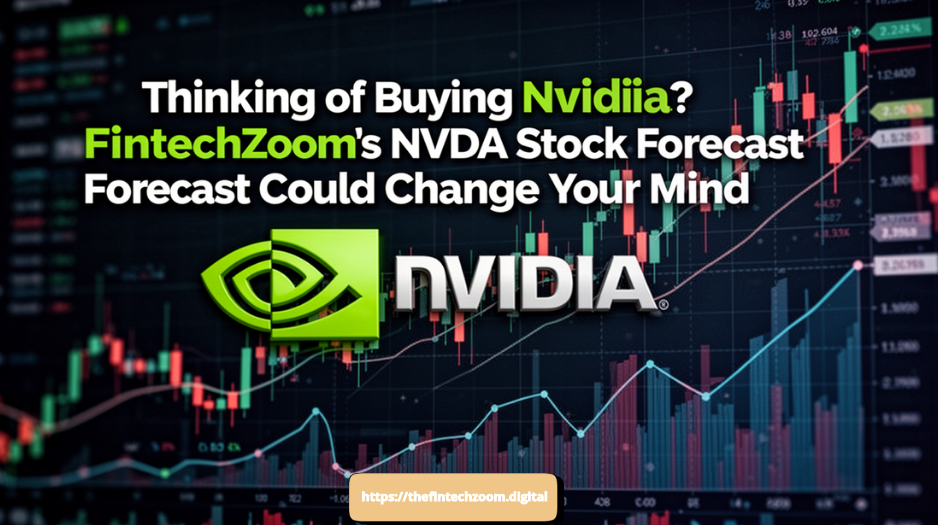
The chart patterns of NVDA stock reveal times of strong uptrends, followed by abrupt corrections. The indicators for momentum and moving averages assist to determine if the stock is overbought, or oversold, thereby providing the signals to enter and exit to traders.
Analysis of volume shows the accumulation in addition to distribution. The high volume seen during price increases suggests a strong interest in buying as well as high volumes in the declines is a sign of selling pressure. These patterns guide trade decisions in the short term.
Levels of support and resistance that are derived from the historical price action can serve as a guideline for future moves. The moment you break above resistance usually results in further gains, whereas dropping below support could accelerate loss.
Institutional and Retail Investor Sentiment
The ownership of institutions in Nvidia is large with large funds holding substantial positions. This stability in prices but it also means that massive sell orders could cause instability. Monitoring flows from institutions can give insight on how to place money in a smart way.
The enthusiasm of retail investors for Nvidia is high, fueled by the AI narrative and the company’s previous performance. The sentiment on social media and the trading volumes from platforms for retail indicate a continued interest, but this may fluctuate quickly during market declines.
Analyst ratings tend to be bullish and many firms are still recommending “buy” recommendations. Price targets differ widely and reflect different expectations about growth rates as well as valuation multiples. FintechZoom’s NVDA forecast of the stock falls in this range of views.
NVDA Stock Forecast for 2026 and Beyond
Looking ahead to 2026 FintechZoom anticipates sustained revenue growth as AI adoption increases across the globe. The projection assumes that Nvidia retains its market share even as it faces increased competition. Revenues could rise to $150-200 billion a year if current trends continue.
Growth in earnings per share should surpass revenue growth as operating leverage increases. However, pressure on margins from competition and an increase in R&D spending could limit profits gains. In the forecast, we incorporate these trends into the earnings projections.
The price targets for 2026 are heavily dependent upon valuation multipliers. If Nvidia trades at a price that is 30-40 times earnings, it could rise to levels that are significantly higher. But an increase in the number of contractions would restrict upside even with a high growth in earnings.
Buy, Hold, or Sell? Investment Strategies for NVDA
For investors who are looking for a long-term investment, Nvidia represents a compelling development story based on secular developments within AI and computer. The buy-and-hold option is a good choice for those who are convinced of these long-term trends and can handle some volatility.
The active traders may utilize technical analysis to predict the entry and exit and take advantage of the volatility of the stock. This method requires more focus and is more risky, but could yield better returns in experienced hands.
Investors who are cautious about risk may want to wait for a pullback before launching positions. Because of the high valuation it is possible to reward patience with higher opening points. Averaging the cost of a dollar reduces timing the risk of purchases across the course of.
Comparing Nvidia to other AI investment options
Microsoft, Google, and Amazon provide indirect AI exposure via the cloud platform they use. These are Nvidia customers and benefit of AI acceptance without having the the risk associated with a pure-play company.
Pure-play AI software firms offer a variety of risk-reward profile. While they could offer greater growth rates, they are often lacking the profits and market dominance Nvidia enjoys. A variety of diversification across AI subsectors can help balance these risks.
AI-focused ETFs can provide instant diversification, but they also have more fees and lower returns. This type of ETF is ideal for investors looking for AI exposure but do not want to select the individual winners.
Dividends, Buybacks, and Shareholder Returns
Nvidia has a small dividend that reflects its emphasis to grow rather than income. The yield is not as high when compared with mature tech companies which makes it less appealing for investors who are focused on income. However, the rate of growth of dividends has been constant.
The programs for share buybacks have been important, redistributing billions of dollars to shareholders. These buybacks decrease share count and increase earnings per share, and boosting the price of the stock. Buybacks indicate confidence by management in the future of the company.
Total shareholder return includes dividends, buybacks, as well as capital appreciation. The strategy of Nvidia is geared towards growth, making it appropriate for investors looking to earn capital gains instead of current income.
Macro Factors Influencing Nvidia Stock
Tech stock prices dramatically. The higher rates lower the worth of earnings to the future, which can hurt high growth stocks such as Nvidia. However, rate reductions can provide an opportunity for tailwinds.
The global economic boom drives corporate spending on technology. A strong GDP growth boosts investments in AI infrastructure and recessions result in budget cuts that decrease the demand for Nvidia’s services.
The geopolitical tensions, specifically between China and the U.S. and China, cause uncertainties. Trade restrictions, tariffs and export control could disrupt the supply chain of Nvidia and restrict market access.
Common mistakes made by investors when investing in high-growth Tech Stocks
The pursuit of momentum after big gains typically leads to buying near highs. The impressive performance of Nvidia’s stock draws interest, but buying at higher prices increases the risk of a negative turn. Be patient and disciplined to keep from falling into this trap.
Neglecting valuations due to the excitement of growth opportunities can cost you. Even top companies could be a poor investment when bought at high prices. Make sure you consider the amount you’re paying in relation to the fundamentals.
Concentrating too much on a single stock even one that looks promising as Nvidia is a risk that is not worth it. Diversification shields portfolios from company-specific issues as well as sector-specific downturns.
Frequently Asked Questions About NVDA Stock Forecast
Which is FintechZoom’s target price on NVDA shares?
FintechZoom’s NVDA stock forecast is based on a variety of scenarios that range from optimistic to conservative. The base scenario is for a moderate price appreciation for the next twelve to 18 months with longer-term targets that are much higher if growth catalysts occur.
Does Nvidia stock a great to invest in the long run?
Nvidia’s leadership in AI and solid financial fundamentals makes it attractive to investors who are looking for a long-term investment. However, the high value and risk of competition need cautious consideration. It is a great part of a portfolio that is diversified.
What is the most appropriate time to purchase NVDA stocks?
The market can be difficult to time. Averaging the cost of a dollar or awaiting pullbacks during larger market corrections could offer better entry points as opposed to buying in all time highs.
What is the way Nvidia compare with AMD in terms of alternative investment?
Nvidia currently leads the way in AI chip performance as well as market share, however AMD has products that are competitive with lower prices. AMD might be more value for investors who prefer to be more cautious, while Nvidia is a good choice for those who value market leadership.
What’s the most serious risks for the price of Nvidia’s stock?
The restrictions on regulatory compliance, threats to competition technology disruption, regulatory restrictions and economic recessions are the biggest risks. Risks to valuation are also substantial due to the current multiples.
Final Thoughts: Should You Invest in Nvidia Now?
Nvidia is at the crossroads of powerful, modern developments in artificial intelligence as well as high-performance computing. The company has created impressive competitive advantages with its software and hardware ecosystem which makes it a challenge for rivals to compete.
But the FintechZoom’s NVDA stocks forecast reminds investors that excellent companies could be poor investments when they’re priced at a wrong price. These valuations are based on extremely optimistic expectations, which leaves a very small space for errors.
If you are an investor with a high risk tolerance and long-term time intervals, Nvidia merits serious consideration. People who want stability or income should consider other options. Whatever you choose to do, be sure that Nvidia matches your overall investment plan rather than letting the excitement take precedence over the rules of discipline.
Before investing, you should review your goals for financial planning as well as your risk-capacity and your allocation to portfolio. Think about consulting an advisor in the field of finance who can give you individualized advice in accordance with your particular needs.



2 thoughts on “Thinking of Buying Nvidia? FintechZoom’s NVDA Stock Forecast Could Change Your Mind”