
Privacy is now a top priority for many cryptocurrency buyers. While traditional exchanges expand their practices for collecting data and regulations become more stringent the market is increasingly exploring ways to purchase bitcoin using SEPA with no verification. This option offers financial independence as well as leveraging the speed and convenience that comes with SEPA transfer services across Europe.
What is “without verification” actually mean? Does it have to be legal? What can you do to protect yourself from scams and maintain your privateness?
This guide will show you all you need to know about purchasing bitcoin using SEPA without verification, from knowing the legal framework to making secure private transactions. If you’re just beginning to learn about crypto or want to improve your privacy, you’ll find practical strategies and information to guide you through this expanding area with confidence.
Bitcoin live Graph
Understanding SEPA and How It Works for Crypto
SEPA or The Single Euro Payments Area, is a system for payment integration that enables European citizens to make euro transfers fast and inexpensively across 36 nations. The transactions typically close within a day, which makes SEPA transfers a preferred method of purchasing cryptocurrency.
If you purchase bitcoin using SEPA without verification, you’re using the banking system to transfer funds to a merchant or platform which doesn’t require you present identity documents. This process is similar to a traditional bank transfer: you request the payment through your account after which the recipient accepts it and then your bitcoin gets released.
The wide acceptance of SEPA as well as its low costs makes it a popular choice for peer-to -peer transactions. It’s crucial to remember that your bank is still processing the transfer, so that the transaction won’t be completely confidential from a bank standpoint.
What “Without Verification” Really Means in Crypto
“Without verification” refers to buying bitcoins without completing Know Your Customer (KYC) procedures. KYC is a requirement of the regulatory system that requires most exchanges to gather personal information such like your complete name and address a government-issued ID, and occasionally an image.
Non-KYC platform do not need to go through this process. They permit users to trade using the trust mechanism, reputation system or escrow service, instead of authentication of identity. This doesn’t mean the transaction is untraceable–blockchain records are public–but it does mean your personal information isn’t stored on a centralized platform.
It’s essential to know it is that “without verification” doesn’t equal “completely anonymous.” Your bank is still able to view the incoming SEPA transactions and blockchain analysis tools can track Bitcoin movement. What you gain is your privacy from the exchange itself, which reduces the possibility of data breaches and government subpoenas aimed at your trading past.
KYC vs Non-KYC Platforms: Key Differences
KYC platforms are licensed organizations that collect and store the user’s data in order to meet Anti-Money Laundering (AML) legislation. They provide convenience, insurance and support for customers, however, they require you to compromise your privacy. Your transaction activity along with your wallet addresses and personal information are all linked and could be accessible to authorities.
Non-KYC platforms are geared towards ensuring anonymity for users. They generally function as peer-to -peer marketplaces that let buyers and sellers communicate directly. They may employ an escrow service to guarantee an honest transaction, however, they do not collect any personal information beyond the information needed to resolve disputes.
The decision is straightforward: KYC platforms offer ease and security by regulating, and non-KYC platforms provide security but at the expense of more personal accountability. If you purchase bitcoin using SEPA with no verification opting for the latter option, and that means you have to be careful regarding vetting sellers and safeguarding your money.
Legal Landscape of Buying Bitcoin Without Verification
The legality of purchasing bitcoin without verification differs by region. In the majority of European countries, buying cryptocurrency for personal use with no KYC is allowed. However, the platforms that facilitate these transactions could operate in areas of uncertainty especially if they do not meet local regulations on financial transactions.
Recent developments in the regulatory landscape, such as those of the European Union’s Markets in Crypto-Assets (MiCA) framework, have tightened the rules surrounding cryptocurrency transactions. Although these rules are primarily targeted at the service and exchange sector, they can indirectly impact non-KYC options, by forcing platforms to implement more stringent control measures.
It is essential to be aware of the specific laws in your country. Contact a tax or legal professional if you’re uncertain about the requirements for compliance, particularly when you’re performing significant or frequent transactions.
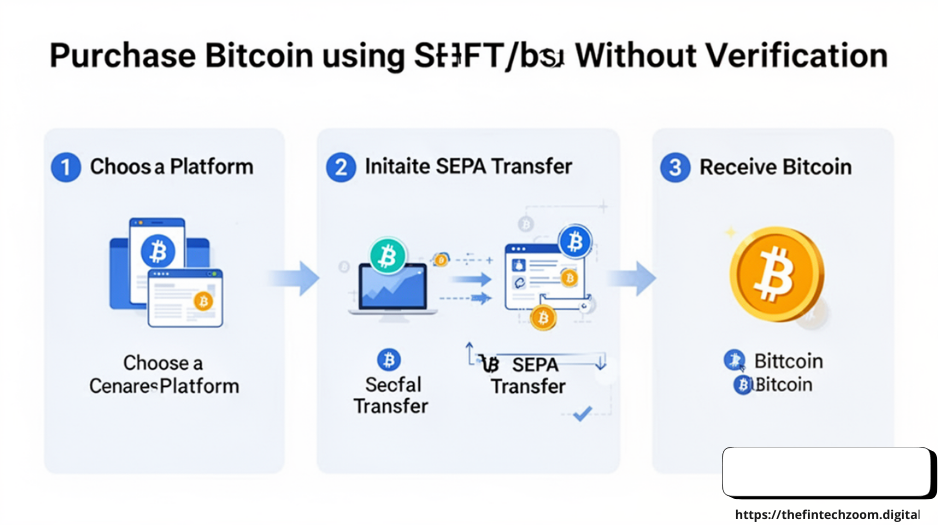
Step-by-Step Instructions for purchasing Bitcoin using SEPA privately
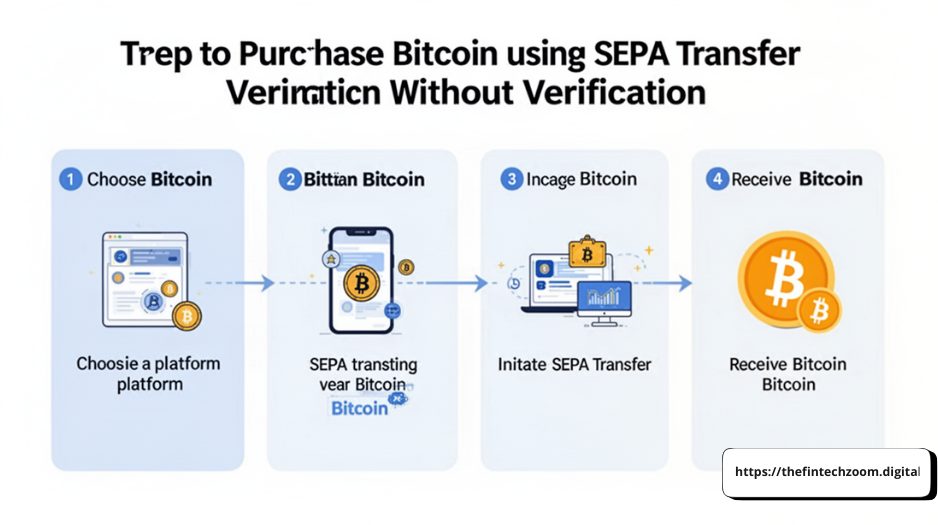
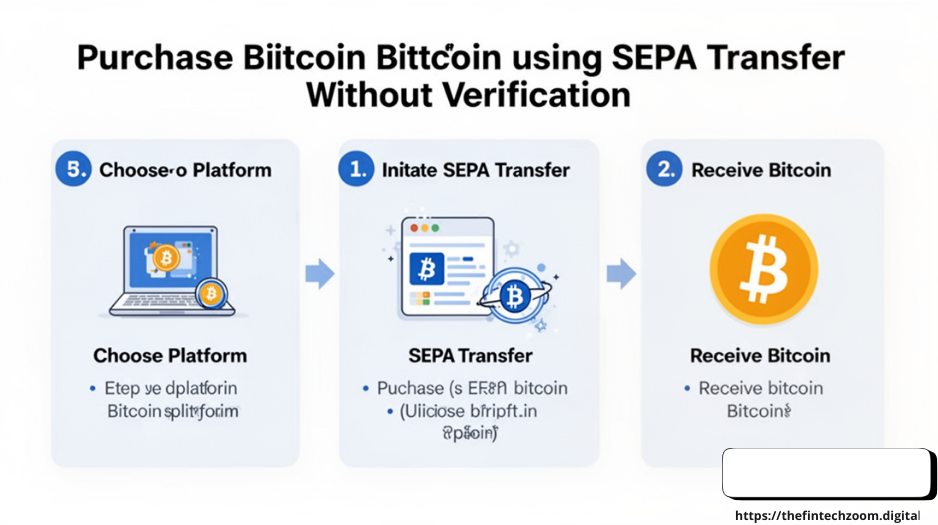
Are you ready to make your first purchase? Use these instructions to purchase bitcoin using SEPA without verification.
First step: Select a wallet that is not custodial
Select one that lets you manage access to your personal keys. The most popular options are Electrum, Wasabi Wallet, and even hardware wallets such as Ledger and Trezor.
2. Search for a trusted P2P service
Find platforms that allow SEPA transfers that do not require KYC. Check for reviews from users as well as transaction volumes and escrow functions.
Third step: Sign up for an account (if necessary)
Some platforms allow guest transactions; others require minimal registration–usually just an email address or username.
4. Browse the available deals
Filter your search by SEPA payment method and then compare rates, reputation of sellers and limits on transactions.
Phase 5: Start the trade
Choose an offer that is in line with your budget and needs. The platform will place the seller’s bitcoins in the escrow.
Step 6 Step 6: Step 6: SEPA transfer
Make use of the online portal for your bank to transfer the agreed amount to the seller’s bank account. Include any reference codes required to ensure that the transaction is authentic.
Step 7 Step 7: Confirm payment, then hold off until the release
Inform the seller when the transfer has been completed. After confirmation, the bitcoin will be transferred to your account.
Choosing the Right Non-Custodial Wallet
Your choice of wallet is vital when you purchase bitcoin on the internet. Non-custodial wallets provide you with complete control over your finances and ensure that no third-party is able to freeze or confiscate your assets.
For users on desktops, Electrum offers a lightweight user experience, with a variety of features and strong privacy choices. Mobile users may like Samourai Wallet or BlueWallet, both of which focus on privacy and security.
Hardware wallets ensure the highest security, as they store private keys in a secure, offline location. They’re perfect for long-term storage and for larger quantities. Some of the most popular models include Ledger Nano X, and the Trezor Model T.
Avoid custodial wallets provided by exchanges as they do not serve the purpose of transactions that are not KYC-compliant. If an exchange is the one that controls access to keys for you, then they manage your privacy.
Using P2P Platforms for SEPA Bitcoin Purchases
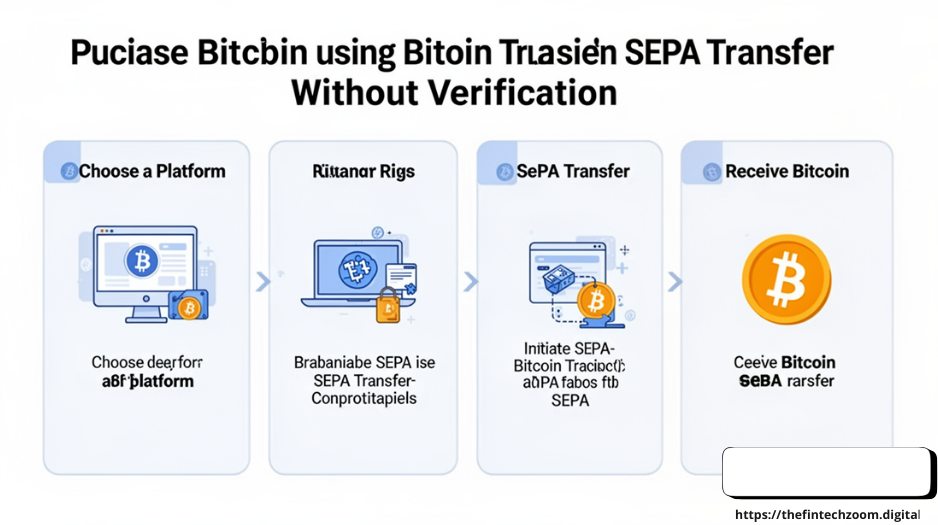
Peer-to-peer platforms form the basis of bitcoin trading without KYC. These marketplaces connect sellers and buyers directly which allows the parties to discuss the terms of payment and other methods without central oversight.
When choosing the best P2P platform, look for one with a good reputation and solid Escrow systems. Escrow safeguards both parties by storing the Bitcoin until the purchaser is able to confirm the payment, thus reducing the chance of fraud.
Popular platforms that support SEPA are Bisq, HodlHodl, and LocalCoinSwap. Each platform has its own unique characteristics: Bisq is fully decentralized and open source, HodlHodl provides multisignature escrow and LocalCoinSwap offers a variety of payment options.
Before making a decision, go through sellers’ profiles carefully. Examine their history of transactions reviews, feedback scores, as well as the time to respond. Sellers who have made hundreds of transactions that have been successful and good reviews are generally more reliable.
Hidden Risks of Non-KYC Bitcoin Transactions
While purchasing bitcoin using SEPA without verification provides security benefits, it’s also without risk. Lack of oversight by regulators implies that you are more vulnerable to scams, fraud and technical problems.
One of the biggest risks is dealing with unscrupulous sellers who might disappear when you receive the SEPA transfer. Although escrow services reduce this risk, disputes could be a problem and the resolution may not be simple.
Another factor to consider is the price that you’ll have to pay. Transactions that are not KYC typically have more fees and lower exchange rates than authentic platforms. Sellers will charge additional fees to compensate for the risk of higher and less liquidity.
In addition, there’s the chance of irreparable mistakes. If you make a payment to an incorrect account or do not provide the correct reference to your payment the process of recovering your money could be a challenge or even impossible.
How to Avoid Scams When Sending SEPA Transfers
Scammers target buyers who are not KYC because transactions are more difficult to reverse. Be safe by following these guidelines:
Verify the authenticity of the seller Use only sellers with a good reputation and have received positive feedback. Beware of accounts with no record of transactions.
Utilize escrow service Don’t ever send money directly to a vendor outside of an Escrow system. Escrow makes sure that your bitcoin is secure until you verify the payment.
Double-check the payment information Check carefully the information on the bank account of the recipient prior to initiating the transfer. A single typo can result in lost funds.
Connect with the platform to keep all conversations in your P2P marketplace. This is an account that can be used in the event of disputes.
Start with a small amount Start by testing the procedure with one transaction before you commit more substantial amounts. This lets you evaluate the credibility of the seller without putting yourself at risk.
Bank Policies and Possible Account Restrictions
Some banks are not crypto-friendly. Certain financial institutions prohibit transactions that involve cryptocurrency, considering them risky activities. This could lead to delayed transfers, account freezes or even the closure.
To avoid friction, you should consider opening a new account with a bank that supports crypto. Look into banks in your region that specifically support cryptocurrency transactions. Alternately, create an account that is dedicated for crypto transactions to eliminate possible issues.
When performing SEPA transfers, do not mention “bitcoin” or “cryptocurrency” in the reference to the payment, unless it is required by the seller. Common references such as “payment for goods” or the code of the seller tend to not draw an investigation.
If your bank decides to freeze your account, you must be ready to show documentation that proves the authenticity for your transaction. Transparency and cooperation typically solve these issues, but prevention is always better than any mitigation.
Fees and Premiums You Should Expect
The purchase of bitcoin using SEPA without verification generally is more expensive than using standard KYC exchange. Transactions that are not KYC-compliant can cost you a premium that range from 3 percent to 10% over market prices, based on the payment method, platform, method, and the seller.
SEPA transfers are generally free or require minimal charges (under EUR1), making them among the least expensive payment options. However, the cost paid by sellers is compensated for the ease and security you get.
P2P platforms can also charge service charges, which are typically between 0.5 percent and 2percent per transaction. These fees help with the escrow process such as dispute resolution and maintenance of the platform.
When you are comparing offers, take into account the total cost, including premiums as well as platform fees and bank charges to find the most cost-effective deal. Sometimes, a higher price is worth it for the seller who has a good reputation and quicker transactions.
Comparing Verified and Non-Verified Crypto Purchases
Secure (KYC) exchanges provide rapidity, liquidity, and customer service. Bitcoin can be purchased instantly with competitive rates, and also withdraw funds to your account within minutes. If anything goes wrong the support team is available to help.
Transactions that aren’t verified by a third party can be considered less secure, need more effort. You’ll have to research platforms, screening sellers and managing communications. The process can be longer and you’re responsible for security.
The decision is based on your preferences. If privacy is important to you and you’re willing to pay more expensive costs and a slower processing speed then a non-KYC option is the best option. If speed and convenience are more important, KYC exchanges may be more suitable despite the privacy compromises.
Privacy Best Practices for Bitcoin Buyers
The protection of your privacy goes far beyond an un-KYC option. Here are some additional ways to improve your privacy:
Make use of a VPN to mask your IP address while accessing P2P platforms to avoid the tracking.
enable Tor Certain platforms, including Bisq are able to support Tor routing to give you additional security.
Beware of address reuse Create a brand new Bitcoin address for each transaction, preventing Blockchain analysis from tying your purchases.
Mix your bitcoins You might want to consider making use of an Bitcoin mixer as well as a CoinJoin to obscure the transaction history, however take note of implications for legal compliance in your area of jurisdiction.
Secure your communication Utilize encrypted messaging applications if you have to talk beyond the platform.
These methods add an additional layer of privacy over transactions that are not KYC and make it difficult for third parties to follow your actions.
Tax Implications of Private Bitcoin Transactions
Even if you purchase bitcoin using SEPA with no verification requirement, you’re accountable with reporting the capital gains tax to authorities of a majority of countries. The non-KYC transactions won’t free you from tax obligation, they just indicate that the exchange won’t be able to declare your transaction.
Keep meticulous records of every transaction such as dates, amounts as well as exchange rates and wallet addresses. This information will be crucial for calculating capital gains or losses in tax time.
Find a tax expert who is who is familiar with the regulations for cryptocurrency to ensure the compliance. Failure to report cryptocurrency transactions could result in fines audits, legal penalties.
Common Myths About Anonymous Bitcoin Buying
Many misconceptions surround non-KYC Bitcoin purchases. Let’s look at the most commonly-held misconceptions:
Myth #1: All transactions that aren’t KYC are completely in the dark.
Bitcoin’s blockchain is publicly accessible which means that all transactions are public. Although your identity doesn’t directly connect to your wallet, a sophisticated analysis can uncover relationships and patterns.
Myth #2: Platforms that are not KYC are illegitimate
In the majority of jurisdictions, using platforms that are not KYC-compliant is permitted to conduct personal business. However, certain platforms might be in regulatory gray areas.
Myth 3. You won’t be identified if you are using non-KYC methods
Your bank will still be able to see SEPA transactions Blockchain analysis is able to track bitcoin transactions. The absence of KYC can reduce exposure, but it’s not 100% secure.
Knowing these facts can help to set the right expectations and also take the appropriate precautions.
Red Flags to Watch Before Completing a Transaction
Certain warning signs can indicate an upcoming fraudulent transaction. Be cautious if you encounter:
Unusually low costs If a deal looks too good for its own good, then it is. Scammers lure victims with appealing prices.
Strategies to make you feel pressured Sellers who hurry you or create false pressure are usually trying to stop your mind from being able to think critically.
Requests to be removed from the platform Sellers who are legitimate conduct transactions in the marketplace. Transferring conversations to third party apps can increase the risk of scams.
New accounts that have no history Avoid sellers with no or only a handful of executed trades.
Ineffective communication Vague responses, grammatical mistakes or refusal to respond are indications of trouble.
Be awestruck by your intuition. If you are unsure take a break and search for another retailer.
Tools and Strategies to Enhance Transaction Privacy
Beyond choosing the appropriate bank and payment system, a variety of tools can help ensure your privacy
VPN providers: NordVPN, ProtonVPN and Mullvad cover your IP address and secure the internet traffic.
Tor Browser: It routes your connection via multiple points, which makes it hard to track your online activities.
Bitcoin mixers Services such as Wasabi’s CoinJoin feature lets you mix your Bitcoins with others, concealing the transaction trail.
Operating systems that are focused on privacy: Tails OS runs on an USB stick, and leaves no trace on your PC.
Utilizing the tools in conjunction with transactions that are not KYC provides multiple layers of privacy which significantly reduces your digital footprint.
Take Control of Your Financial Privacy
The purchase of bitcoin using SEPA with no verification requirements is a simple option to secure your security in a constantly monitored financial market. While it is more arduous and has higher cost than traditional exchanges, the freedom and privacy it affords can be a boon to many people.
Begin small, do your research thoroughly and put security first each step. Select reputable P2P platforms, examine sellers with care, and make use of wallets that are not custodial to ensure complete control over your funds. Following the tips that are described in this guide that will help you manage transactions without KYC with confidence and safely.
Be aware that privacy is a way of life and not a product. Be aware of changes to the law and constantly improve your security practices and always place caution over convenience.
Frequently asked question
How to Buy Bitcoin Without Verification?
To purchase Bitcoin with no verification required, you’ll have to make use of marketplaces or platforms that don’t have to follow the Know Your Customer (KYC) procedures. This usually involves using peer-to-peer (P2P) platforms such as Bisq, HodlHodl, or LocalBitcoins which allow transactions to be performed in a direct manner between the users. Be sure to choose private payment methods like gift cards, cash deposits or other options that are not traceable to keep your identity private. Be sure to verify the credibility and rating of the counterparty prior to beginning a trade.
How do I buy Crypto using SEPA Fast?
Many European platforms and exchanges accept SEPA Instant transfers to facilitate quick and easy payment. To purchase cryptocurrency using SEPA Instant you must choose an exchange that supports crypto or a P2P trading website such as Bitpanda, Kraken, or Binance which supports SEPA Instant as an option for payment. After you have registered and credited your account using an SEPA instant transfer method, you will be able to buy the cryptocurrency you want. To ensure your privacy look for non-KYC exchanges which allow SEPA immediate transfers.
Which Bitcoin Wallet Does Not Require Verification?
The non-custodial wallets, such as Electrum, Samourai Wallet, Sparrow Wallet, and Wasabi Wallet generally don’t require verification for setting or utilize. These wallets give you total control of your private keys and place a high value on privacy for users. Always make sure to download wallets directly from their official websites to stay clear of phishing scams and malicious software.
What Is the Easiest Way to Buy Bitcoin Without Lengthy Verification Processes?
The most efficient way to get Bitcoin without a lengthy verification process is to use P2P platforms which do not require KYC. Platforms like Bisq allow you to exchange Bitcoin as a currency exchange in peer-to-peer transactions without the need for personal identification. In addition, Bitcoin ATMs in some areas allow cash transactions of Bitcoin with no or minimal identification requirements, although charges may be more expensive. To speed up transactions, you can consider vouchers and prepaid services, should they be available in your area. Always consider secure methods and platforms to ensure a secure buying experience.
Can I legally purchase Bitcoin in the absence of KYC?
The legality of purchasing Bitcoin without KYC is contingent on your country’s rules. While some jurisdictions allow transactions that are anonymous, others require KYC for all cryptocurrency transactions. Always verify the crypto laws in your area prior to making a purchase.
What’s the potential risks of purchasing Bitcoin with no KYC?
Making purchases with Bitcoin without KYC is a risk that comes with higher dangers, for instance, being targeted by fraudsters or scammers. In addition, transactions are generally not traceable, which could pose legal risk in some areas. Be sure to use reliable platforms and adhere to the laws of your local area.
What is HTML0? Can I buy Bitcoin without revealing my identity?
Yes selling Bitcoin anonymously is possible using P2P platform as well as Bitcoin ATMs that don’t require identification. But, make sure you check the security of the platform and its reputation prior to making a purchase.
Are there costs associated when buying Bitcoin with no KYC?
There are fees that tend to be more expensive when purchasing Bitcoin with no KYC because P2P-based platforms or Bitcoin ATMs typically charge extra for privacy and ease of use. It’s crucial to look at prices and weigh it against any privacy advantages.
How can I guarantee security when purchasing Bitcoin in anonymity?
To protect yourself, utilize trusted platforms, confirm the seller’s rating to ensure safety. P2P exchanges and utilize Escrow services whenever you can. Beware of sharing personal information that is not necessary and make sure that your wallet is safe before making the payment.
Conclusion
Buying Bitcoin with SEPA without verification is a feasible option for individuals prioritizing privacy and convenience. By utilizing trusted P2P platforms and adhering to safety precautions, such as verifying the credibility of sellers and protecting your wallet, you can complete transactions securely. However, it’s crucial to remain mindful of the associated risks and stay informed about applicable legal regulations in your region. With careful planning and attention to privacy, you can safely and efficiently engage in cryptocurrency transactions.





1 thought on “How to Purchase Bitcoin using SEPA without verification”