
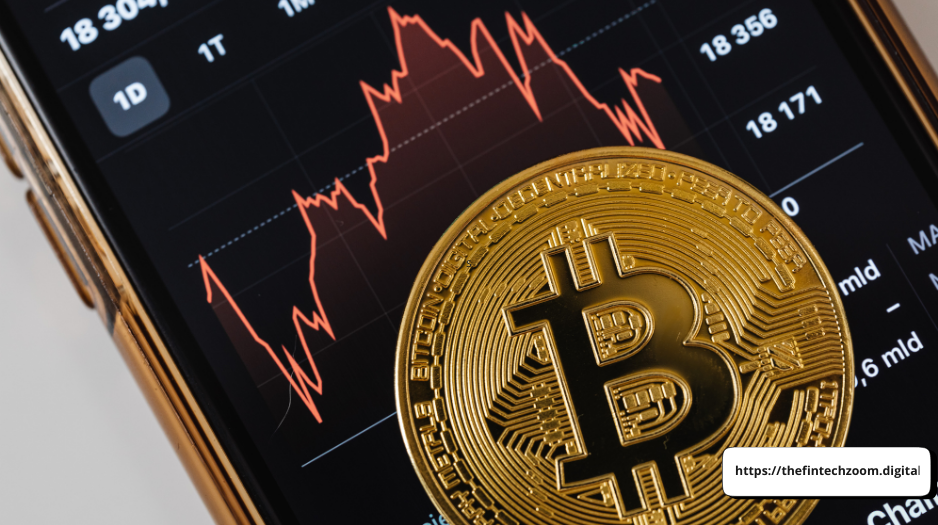
The choice between Cryptocurrencies vs Stocks is today’s investor’s take on the “tortoise & the hare”. One is centuries’ worth of tried-and-true finance, growth-by-compounded-growth. The other is a digital revolution, which promises explosive returns in exchange for stomach-churning trading action.

And now we look to 2026, and the financial ground is moving. Technology is altering the way we understand ownership, value and risk. You’re not just picking an asset class; you’re picking a philosophy. This guide dissects the key differences, risks and rewards to help you choose which vehicle — or maybe a mix of both — will propel your wealth forward.
I. Introduction: The Problem of the Modern Investor
Cryptocurrencies vs Stocks – The discussion is louder than ever. Inflation has chipped away at purchasing power and traditional savings accounts just aren’t cutting it. Investors are pushed into the arms of higher returns, which brings them smack in to the center of this financial tug-of-war.
But access to both markets has been democratized by technology. You can purchase a piece of a Bitcoin or a slice of Apple from your phone while waiting for coffee. But it’s essential to know that ease of access isn’t the same as simplicity. This is a guide that goes into the details about the mechanics, history and the future potential of both classes of assets so you can make better-informed decisions for yourself.
II. Understanding the Basics of Investing
At its essence, investing is the process of committing money or capital to put it to work, such that it increases over time. whether one is comparing Cryptos vs Stocks the objective is consistent for both- wealth preservation, income production and capital growth.
The basic price to pay is always risk versus reward. Higher potential returns usually mean a higher risk of loss. While that is out of reach for many, understanding your personal timeline and risk tolerance is the first step before you even buy a single coin or share.
III. What Are Stocks?
Stock is a part-ownership in a company. When you purchase a share, you are buying a piece of the company. You are wagering that the company will grow, generate higher profits and be worth more over time.
How Markets Operate
Stock markets are regulated exchanges where equity is bought and sold through buyers and sellers. This comprises of several stocks:
• High Growth Stocks: Companies using profit for growth rather than returning to shareholders (ie Tech).
• Dividend Stocks: Businesses that distribute earnings to shareholders.
• Blue-Chip Stocks: Established, stable corporations.
When you compare Cryptocurrencies vs Stocks, stocks are normally considered the engine of the conventional economy.
IV. What Are Cryptocurrencies?
Cryptocurrencies are digital or virtual currencies that use cryptography for security. And unlike stocks, they don’t necessarily represent ownership in a company. Instead, they tend to be a share of a decentralized network or protocol.
Blockchain and Assets
At the heart of crypto is blockchain technology that underlies it, a decentralized ledger that logs all transactions.
• Bitcoin: Commonly referred to as “digital gold” and a store of value.
• Ethereum: A platform for applications that run on the blockchain.
• Tokens: Utility tokens offer access to services, security tokens are more like investment contracts.
V. Stocks Compared to Cryptos: A History
For the analysis of Cryptocurrencies vs Stocks, Context is king. The stock market has been around for centuries, ever since the founding in 1792 of the New York Stock Exchange. And it has survived wars, depressions and bubbles, only to revive eventually.
The first cryptocurrency, Bitcoin, was created in 2009. Crypto is a nascent market, after all. Stocks have centuries of data to sift through; crypto, just over a decade and a half. This dearth of historical information renders crypto a speculative frontier relative to the long history of equities.
VI. Market Volatility: Which Is Riskier?
Volatility is where Cryptocurrencies vs Stocks differ very clearly.
Stock Market Swings
Stocks have gone wild, often in reaction to economic reports or earnings. A “bad year” in the stock market could be one where stocks fall by 20%.
Crypto Cycles
Crypto volatility is extreme. It is not unusual for Bitcoin or Ethereum to lose 50% or more of their value in a bear market, and to gain 100% on a bull run. Emotional investing is a huge factor here; FOMO and panic selling are even more exacerbated in the 24/7 crypto markets.
VII. Prospective Returns: Which Is the Greater Opportunity?
If you are seeking slow, compounding growth, history is on the side of stocks. The S&P 500 has provided an average annual return of around 10%.
But if you compare Cryptocurrencies vs Stocks for truly explosive growth, then the winner is crypto. Early adopters of Bitcoin or Solana could gain returns of 1,000% or well in excess over small time frames. But these gains involve the risk of complete loss. Risk-adjusted returns — how much bang for your buck you get in return for the risk involved — are critical to consider.
VIII. Regulation and Legal Protection
Oversight
Such restrictions are everywhere imposed on stocks by entities like the SEC. Firms must disclose transparent financial reports. You know what you are buying.
The Wild West
Crypto regulation is evolving. Although there are some safeguards, the space is vulnerable to scams and regulatory crackdowns. In the fight of Cryptocurrencies vs Stocks, stocks provide more legal protection to the investor hands-down.
IX. Liquidity and Accessibility
• Stocks: Markets open and close. The sales are instantaneous, but settling the cash can take days.
• Crypto: Markets never sleep. You can trade at 3 a.m. on a Sunday!
Crypto also provides superior financial inclusion. Anyone with internet access can take part, whereas stock markets usually demand bank accounts and meet minimums.
X. Income Generation Opportunities
• Dividends: A lot of stocks give quarterly cash just for being on the team. It’s a steady stream of passive income.
• Staking: In crypto, you can “stake” your coins in order to secure the network and receive rewards. Yield farming delivers high yields, but the stability of that income does not hold a candle to corporate dividends.
XI. Diversification and Portfolio Strategy
Good investors don’t see Cryptocurrencies vs Stocks as an either-or question.
• Stocks: The foundation. They are a safe and steady source of growth.
• Crypto: The satellite. A small position – 1-5% – can give you exposure to high growth opportunities without absolutely destroying your portfolio if the trade goes to zero.
XII. Security and Risk of Loss
SIPC insurance covers stock investors for up to $500,000 if a brokerage goes under. In crypto, if you lose your private keys or get hacked, chances are that money is gone for good. We remove platform risk (no more relying on a company to secure your assets), but add user error risk.
XIII. Tax Implications
Capital gains tax is generally payable on both assets. But yet, Cryptocurrencies vs Stocks distinction also vary from complexity to complexity. Stock brokerages send you a neat tax form. In crypto, you might be required to have specialized software in order to track every trade, swap and staking reward in order to stay compliant.
XIV. Market Influencers and External Factors
Stock prices rise and fall based on interest rates, inflation and earnings. In addition to these, crypto prices are also driven significantly by social media sentiment and institutional adoption. A single post in crypto by an influencer can impact the market more than a post about stock.
XV. Technology and Innovation Factor
Stocks let you own a piece of tech companies (think NVIDIA or Microsoft) building the future. Crypto gives you access to investing in the technology protocols themselves. In the Cryptoccurencies vs Stocks fight, you really have to ask yourself: Do I want to own the company that’s building the tech, or do I want to own the currency that powers and runs it?
XVI. Environmental and Ethical Considerations
• ESG Stocks: You can pick funds according to environmental values.
• Crypto: Bitcoin mining uses a lot of energy, but the industry is moving toward renewables. Their cousins, the Proof-of-Stake coins (such as Ethereum), are much more environmentally friendly.
XVII. Investor Profiles: Who Needs What?
• Conservative Investors: Rely mostly on stocks and bonds.
• Aggressive Risk Takers: Double down on growth stocks and go higher in crypto allocation.
• Retirement Planners: Check the consistency of stocks.
• Short-Term Traders: Both markets can provide opportunities, but crypto’s volatility offers more daily action.
XVIII. Popular Myths about Crypto and Stocks
• “Crypto is nothing more than a bubble”: It has eked its way through countless crashes and is being embraced by BlackRock and Fidelity.
• “Stocks always go up”: Check the lost decade of the 2000s. Stocks can stagnate.
• Market Manipulation: Both markets are rife with it, but it’s even more prevalent in unregulated crypto assets.
XIX. Real-World Case Studies
Think of Warren Buffett, whose fortune was amassed through patient investment in the stock market over decades. Contrast that with the “crypto millionaires” of 2021, nearly all of whom saw their paper wealth vanish in 2022. The lesson? It’s not just what you buy, it’s when you sell as well as how you manage risk which separates successful day traders from the rest.
XX. Pros and Cons Comparison Table
| Feature | Investing in Stocks | Investing in Cryptocurrencies |
| Primary Benefit | Stability and compound growth | Potential for explosive, rapid returns |
| Risk Level | Moderate | High to Extreme |
| Regulation | High (SEC oversight) | Low to Moderate (Evolving) |
| Market Hours | Mon-Fri, Market Hours | 24/7, 365 days a year |
| Income Type | Dividends | Staking rewards / Yield |
| Protection | SIPC Insurance | Limited / None (Self-custody) |

XXI. How to Get Started
Brokerage vs Exchange: Open a brokerage for stocks (Fidelity, Schwab) and an exchange for crypto (Coinbase, Kraken).
Establish Goals: What are you saving for – a house in 2 years or retirement in 30?
Start Small Dollar-cost average into positions instead of making one large purchase.
XXII. The Aftermath: The World In 2026 & Beyond
As we head to 2026 I expect the debate between Cryptocurrencies vs Stocks will become indistinct. The world of traditional finance is moving to blockchain (tokenized assets) and crypto is in search of regulatory control.
The future is not of one killing the other. It is about coexistence. Your smart portfolio in 2026 may well comprise high-quality equities for stability and a carefully managed slice of digital assets for growth.
Frequently Asked Questions (FAQs)
Is cryptocurrency safer than stocks?
Most of the time, no. There are tangible assets, and cash flow, and regulation to hold up stocks. Cryptocurrency is riskier and more volatile, prone to hacking and regulatory uncertainty.
Is it possible to lose all your money in crypto?
Yes. If a project flops, is hacked or you lose your private keys, you could lose your entire investment. Stocks can also go to zero, of course, which is less likely with diversified indices.
So, are stocks better for long-term investing?
For centuries, stocks are the tried-and-true go-to when it comes to building wealth over time through compound interest and dividends.
What percentage of my portfolio should be in crypto?
Keep your holdings of speculative assets like crypto to 1% to 5% of your total portfolio, according to most financial advisors, and overall risk tolerance.
Do stocks offer safer returns than crypto?
Yes. The stock market has historically offered more reliable — and measurable — returns than the wild fluctuation of crypto.
Which is the best investment in inflation?
Stock prices frequently serve as a hedge when companies raise prices. Bitcoin is advertised as an inflation hedge but its track record under high inflation has been mixed.
Cover up for said stories: Can novice investors play both stocks and crypto?
Absolutely. Some apps have begun allowing you to grasp them both. But if you’re somewhat new to this, then your first focus should be on risk management strategies.
Are cryptocurrencies regulated like stocks?
No. Regulation is on the rise, but crypto doesn’t have the rigid oversight, reporting requirements and insurance protections that stock markets do.
How are cryptocurrencies and stocks taxed differently?
Both would trigger capital gains tax upon selling at a profit. But crypto transactions (such as swapping one coin for another) are taxable events, which adds another layer of complexity to reporting.
Crypto or stocks for investment in 2026?
Sometimes the best route is moderation. Have stocks as your financial foundation and crypto for potential high-growth upside.
Should I invest in crypto or stocks?
It varies depending on your financial goals, risk tolerance and investment horizon. Stocks are also considered to be safer as they have a history of long-term growth and offer the possibility for dividends, as well as being regulated. Crypto, meanwhile, presents opportunities for higher returns because it is so volatile — but at far greater risk. A good portfolio will tend to have a mix of both to take advantage of the strong points of each asset class.
Can you make 1000 a day with cryptocurrency?
You can certainly make $1000 per day trading cryptocurrency however, it’s not what most people are going to achieve. This requires a large amount of capital, some crypto market knowledge and understanding the risks associated with the extreme volatility that accompanies cryptocurrencies. It’s important to remain cautious while trading cryptocurrency and to take on only as much risk as you can afford to lose.
What’s $1 worth of crypto today?
The worth of $1 of crypto varies depending on the currency in question. For instance, $1 might purchase a fraction of a Bitcoin or several units of a less costly cryptocurrency like Dogecoin. Always compare the current market price from several sources on a trusted exchange to get accurate local rates.
Is crypto riskier than stock?
Yes, crypto is generally riskier than stocks. Most (eligible) stocks represent well-established companies, are subject to stringent regulation and have a track record of relative consistency over time. These cryptocurrencies, however, are speculative and exhibit high volatility with little oversight. This is likely to render the crypto market more volatile and liable to bigger price fluctuations.
Conclusion
Cryptocurrency investments are uniquely exciting — and wrought with danger. Investors should educate themselves, be aware of market dynamics and consider their risk appetite before venturing into the crypto scene. Although cryptocurrency may offer high returns, it is important to treat it with caution and diversify your investment, as well as consult financial advisors when necessary. Remaining informed and well-rounded allows individuals to make sound decisions in a quickly changing market.





1 thought on “Cryptocurrencies vs Stocks: Building Real Wealth in 2026 and Beyond”